To consumers, AI exists in the invisible abstraction of "the Cloud". In reality, gigawatt substations, liquid cooling loops, and high-density compute clusters form industrial monoliths.
The Geopolitics of Compute
How global sanctions are rewriting AI architectures – and why computing power, hardware and legal control are becoming central questions of digital sovereignty.
Executive Summary & Core Hypotheses
Global AI development is not dictated by algorithms alone, but by the physical availability of semiconductors, energy and data centres. This research examines the geopolitical leverage of modern compute infrastructure and outlines the strategic consequences for European and international organisations.
Constraint as Catalyst
How global sanctions reshape AI architectures – and challenge Europe to achieve digital sovereignty.
Artificial Intelligence is frequently mischaracterized as ethereal software. In reality, power is determined not by pure code alone, but by physical access to compute, power grids, and chip fabrication.

While immense private investments in the United States pour into highly capitalized infrastructure and massive models, Western sanctions pressure in China intensified the incentive for maximum hardware efficiency: Alongside monolithic dense architectures, highly efficient sparse Mixture-of-Experts (MoE) systems gained critical momentum, demonstrating how active compute requirements per token can be significantly reduced.
Europe stands at a strategic juncture: Possessing strong foundational research in mathematics and computer science, limited access to localized high-performance compute historically hampered autonomous scaling. The European Tech Sovereignty Package and the proposed Cloud and AI Development Act (CADA) aim to establish a new sovereign operating environment alongside EuroHPC supercomputers.
Key Takeaways:
- AI is physical industrial infrastructure, not just code.
- Sanctions restrict hardware access, increasing the imperative for algorithmic efficiency.
- Europe’s strategic autonomy hinges on combining the proposed CADA sovereignty framework with EuroHPC compute infrastructure.
Compute is the Heavy Industry of the 21st Century
The illusion of the virtual dissolves into physical reality.
AI is steel, concrete, cooling systems, and specialized silicon. Global leadership in foundation models is a resource-intensive competition for physical infrastructure.
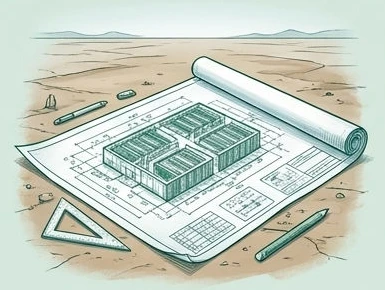
The Layman Illusion

The Physical Reality

Through strategic initiatives like InvestAI and EuroHPC, the European Union aims to mobilize hundreds of billions in combined investments to scale compute and AI capacity. Without sovereign infrastructure, dependence on foreign compute providers becomes structural.
Fact Check1 SourceExpansion of European Compute & AI CapacityDetails
§Expansion of European Compute & AI Capacity
Claim:EU initiatives like InvestAI and EuroHPC aim to mobilize hundreds of billions in investments for AI and digital infrastructure
Context:Strategic initiatives of the European Commission to strengthen European AI and data center capacity.
Three Global Actors, Three Distinct Strategies
Capital concentration, efficiency imperatives, and regulatory sovereignty initiatives.
The global AI landscape is defined by three distinct economic spheres, whose development trajectories are shaped directly by resources, market structures, and regulatory frameworks.
USACapital Concentration & Hyperscalers
Leading technology corporations such as Alphabet, Microsoft, and Meta deploy hundreds of billions into AI infrastructure (Alphabet expanding annual infrastructure capex beyond $50B). Focus: Massive private capital concentration, dominant hyperscalers, and resource-intensive training of frontier models.

ChinaEfficiency Imperative & Industrial Policy
Facing US export controls on cutting-edge accelerators, China combines state-directed industrial policy with agile model optimization: High publication output and systematic adoption of sparse and MoE architectures to reduce active hardware demands.

EuropeResearch Heritage & Sovereignty Framework
Europe possesses internationally recognized foundational research and an established HPC tradition, but historically lacked globally dominant commercial hyperscalers. The response: The proposed regulatory framework (CADA) and targeted development of EuroHPC AI Factories.
Fact Check1 SourceHyperscaler CapexDetails
§Hyperscaler Capex
Claim:Alphabet $150B cumulative infrastructure expenditure
Context:Consolidated infrastructure capex guidance in SEC Form 10-K filings.
Hardware Can Be Blocked – Software Weights Flow
Why classical export controls face boundaries against open-weight models.
Export controls (EAR / BIS) enforce physical border restrictions on advanced semiconductors. However, software weights largely bypass conventional physical customs controls.
Physical Border (EAR / BIS)

While customs authorities can inspect physical freight at borders and ports, open-source models diffuse across global networks. Hardware export controls constrain physical data centers, but cannot easily halt the worldwide diffusion of mathematical model weights.
Open Weights Diffusion
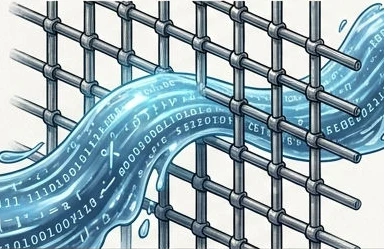
A model with hundreds of billions of parameters consists fundamentally of numerical weight matrices. Once released as open weights, parameters diffuse globally across encrypted channels within moments.
How Sanctions Influence Innovation
Feedback loops and adaptation dynamics in semiconductor geopolitics.
US export controls increased incentives for Chinese research teams to maximize hardware efficiency, reinforcing a strategic focus on leaner architectures.
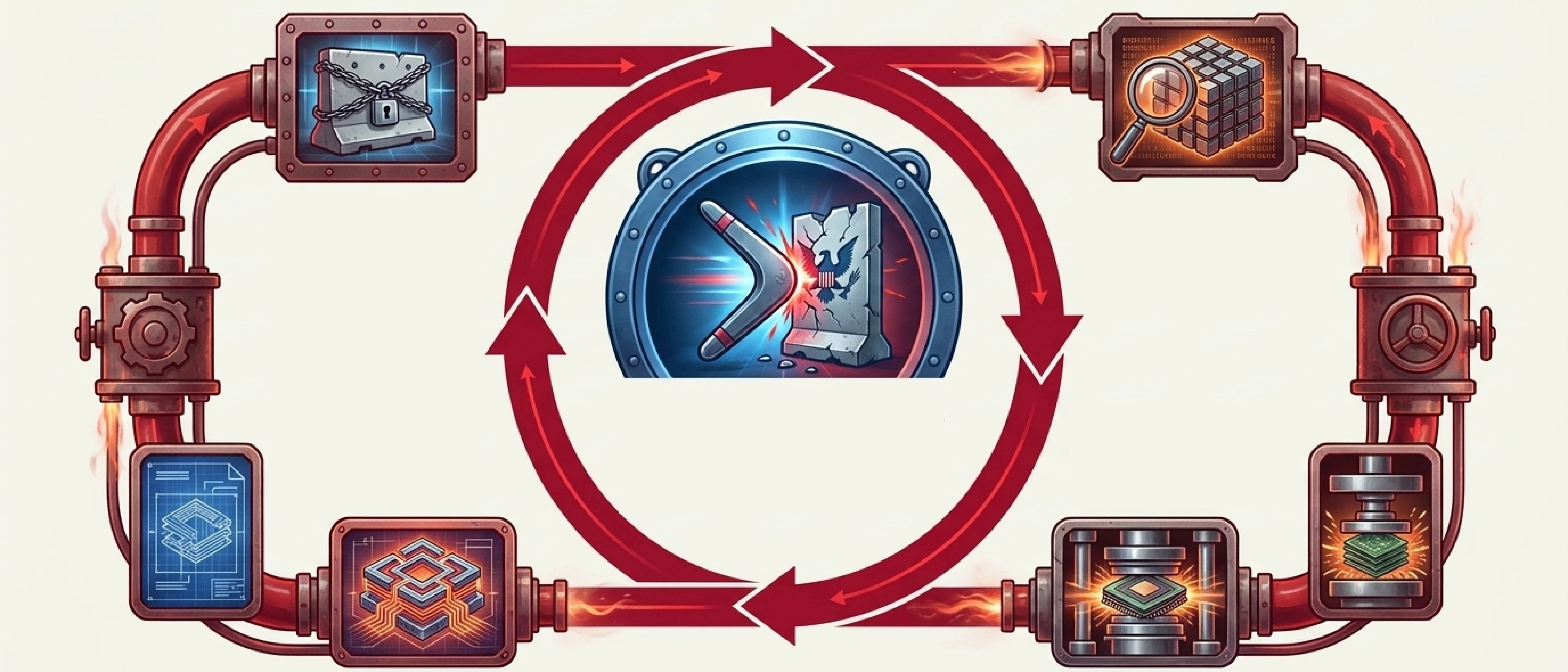
Facing constrained access to cutting-edge accelerators, Chinese labs deployed sparse and MoE architectures with particular consistency for efficiency gains. However, the foundational techniques reflect an international research history.
Export controls intensified incentives to utilize existing hardware more efficiently, amplifying an existing research trajectory toward leaner architectures. Frontier Chinese models demonstrate that competitive performance is achievable with significantly lower active compute and parameter overhead.
Dense Models vs. Sparse Mixture of Experts (MoE)
How sparsity optimizes inference compute requirements.
Under constrained silicon access, labs have systematically leveraged sparse and MoE architectures to attain frontier capabilities with reduced active compute per token.
Dense Architecture

In a standard dense architecture, all model parameters are activated for every token processed. Analogously, every department in a building is engaged simultaneously, requiring immense compute throughout.
Sparse Mixture-of-Experts (MoE)
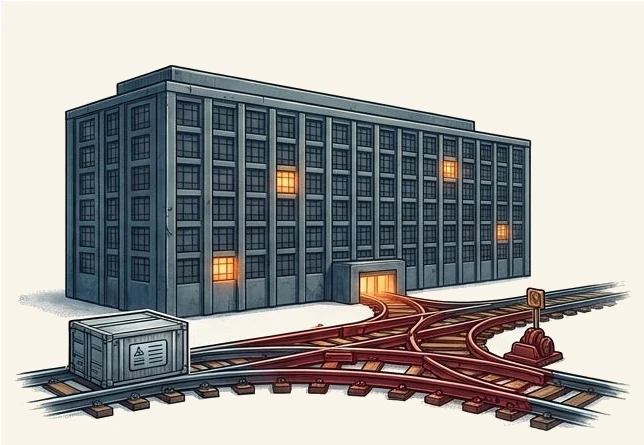
MoE substantially reduces the proportion of parameters activated per token, thereby lowering arithmetic compute compared to an equivalent dense model; however, memory footprint and inter-node communication costs remain significant. For instance, the open-weight model DeepSeek-V3 activates only 37 billion out of its 671 billion total parameters per token.
Research Volume and Citation Impact
Chinese frontier AI research closes capability gap according to benchmark metrics.
According to the Stanford AI Index, the benchmark performance gap between leading US and Chinese frontier models narrowed to just a few percentage points (approximately 2.7% on evaluated benchmarks). Simultaneously, China leads across multiple publication and citation metrics.
China holds high share of high-impact citations (48%)
Despite significantly lower measured private AI investment ($285.9B in the US versus $12.4B in China according to the Stanford AI Index), leading Chinese models closed much of the capability gap. However, comparing private venture flows alone captures state-directed investments and alternative capital vehicles in China only incompletely.
Crucially, citation metrics show a pronounced shift: According to tracking by ASPI and Stanford HAI, Chinese institutions account for approximately 36% of global AI publications and up to 48% of high-impact citations. The assertion that Chinese research is purely volume-driven without citation impact is challenged by these benchmarks.
Fact Check1 SourceResearch Gap & CitationsDetails
§Research Gap & Citations
Claim:Frontier model benchmark gap narrowed to ~2.7%; $285.9B (US) vs $12.4B (China) in measured private AI investment
Context:Stanford HAI AI Index & ASPI analyze publication citations and comparative model benchmark convergence.
Source:Stanford HAI & ASPI↗
Scientific Foundations and Infrastructure Challenges
European research capabilities in the global competition for compute.
Europe possesses strong research and development capabilities in mathematics, computer science, and AI, but has so far struggled to translate this foundational strength into domestic large-scale compute infrastructure.

European research institutions have made significant contributions to efficient AI, mathematical optimization, and foundational theory. However, many of today’s pivotal architectures emerged from a global research ecosystem spanning international universities and industrial laboratories.
Limited access to large-scale compute infrastructure made it challenging for European research teams and startups to scale frontier research domestically. Consequently, portions of talent and commercial value creation gravitated toward more heavily capitalized international ecosystems.
The Legal Framework: Why Geography Alone Falls Short
The US CLOUD Act and the limits of physical data localization.
A data center on European soil alone does not guarantee full legal sovereignty if the operating provider remains subject to third-country jurisdiction.
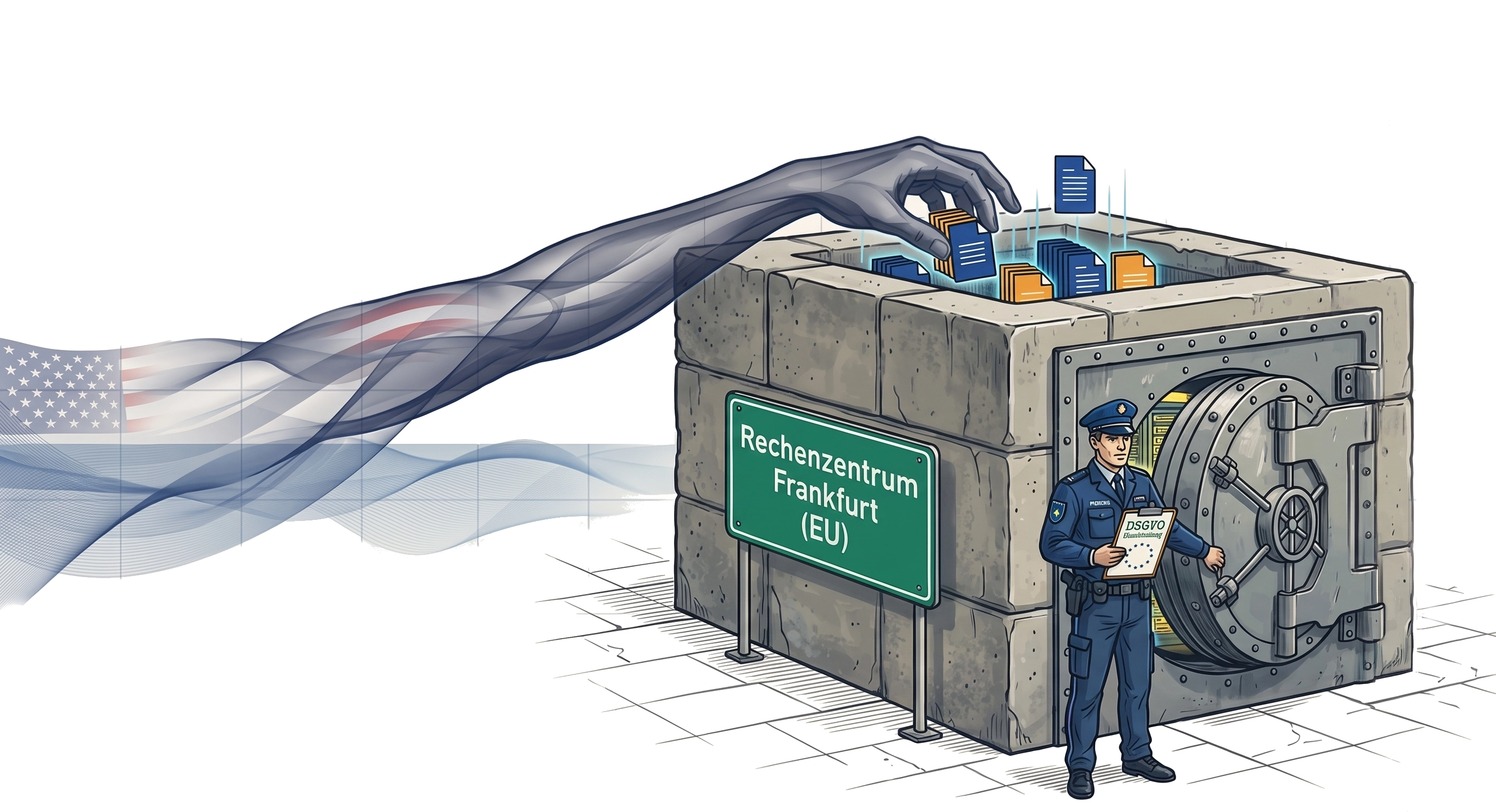
The US CLOUD Act (18 U.S.C. § 2713) clarifies that US providers must comply with lawful US disclosure orders regardless of where data is stored, provided the records remain within their possession, custody, or control.
Pure data localization can serve as a relevant baseline for compliance, but does not eliminate extraterritorial jurisdictional risks as long as corporate parent entities remain subject to foreign disclosure orders. Achieving comprehensive autonomy requires corporate governance and operational separation.
Fact Check1 SourceExtraterritorial Disclosure Obligations in US LawDetails
§Extraterritorial Disclosure Obligations in US Law
Claim:US CLOUD Act (18 U.S.C. § 2713) establishes disclosure obligations regardless of physical data location
Context:18 U.S.C. § 2713 obligates US service providers to disclose data within their custody or control regardless of physical server location.
Europe’s Strategic Initiative: Tech Sovereignty Package
Aligning regulatory frameworks, infrastructure, and open-source models.
To address strategic dependencies on foreign hardware monopolies and closed model ecosystems, the EU builds upon a three-pillar foundation.
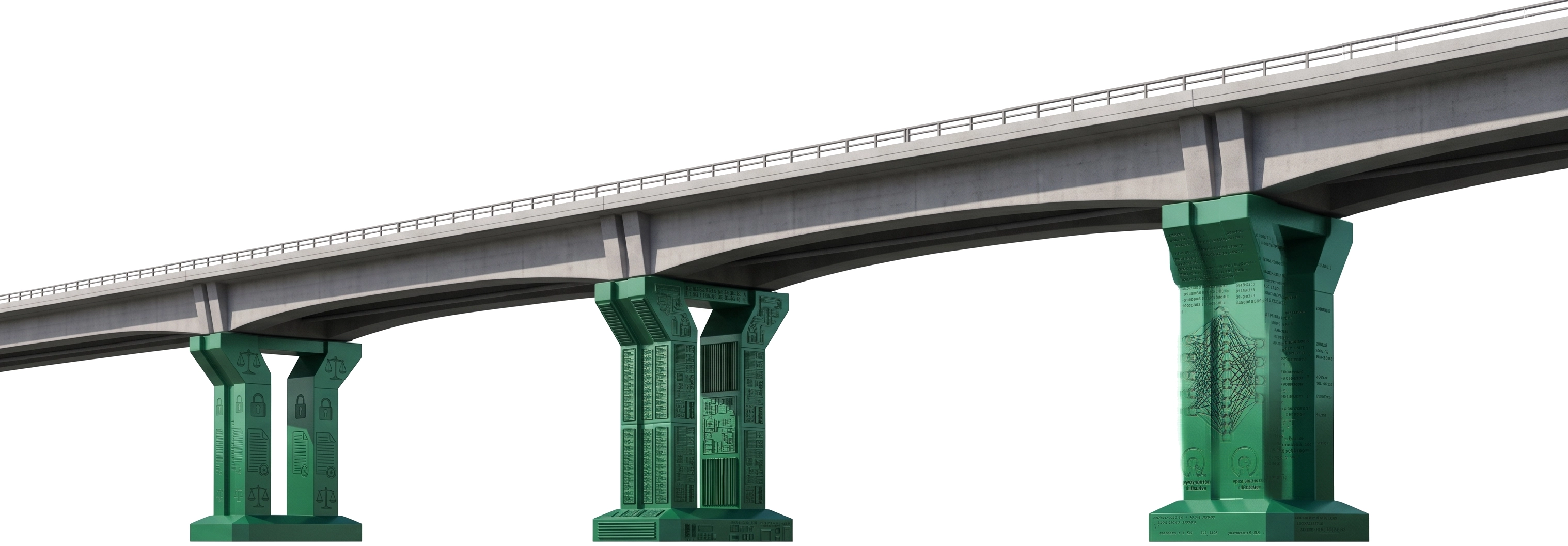
⚖️ Left Pillar · Regulatory Framework (CADA): The proposed Cloud and AI Development Act establishes tiered sovereignty criteria for public procurement and critical data to mitigate jurisdictional exposures.
🖥️ Middle Pillar · Hardware (EuroHPC): Targeted capital injection for European exascale supercomputers (such as JUPITER and Jules Verne) and their expansion into dedicated AI Factories powered by clean energy.
🌐 Right Pillar · Software (Open Source First): Strategic support for European open-source and open-weights foundation models (via consortia like ALT-EDIC and European research alliances), aligned with EU standards and transparency.
Fact Check3 SourcesPillar 1: Cloud Sovereignty & EU Data Act · Pillar 2: EuroHPC AI Factories Initiative · Pillar 3: Open Source AI & Foundation ModelsDetails
§Pillar 1: Cloud Sovereignty & EU Data Act
Claim:Proposed legal shield: CADA and Cloud Rulebook address data control in public procurement
Context:European Commission digital strategy establishing criteria for data portability and immunity.
§Pillar 2: EuroHPC AI Factories Initiative
Claim:Up to €10B overall volume across EuroHPC and AI Factories for European supercomputing and compute infrastructure
Context:Regulation (EU) 2024/1732 amending the EuroHPC Regulation with regard to the AI Factories initiative.
§Pillar 3: Open Source AI & Foundation Models
Claim:Open Source First: Alliance for Language Technologies & Open-Weights Foundation Models
Context:European Digital Infrastructure Consortium (ALT-EDIC) for open, sovereign multilingual AI models.
CADA: The Proposed Sovereignty Tier Framework
Union Assurance Levels for differentiated assessment of sovereignty requirements.
The proposed Cloud and AI Development Act (CADA) outlines a tiered structure of Union Assurance Levels to evaluate cloud and AI sovereignty systematically.
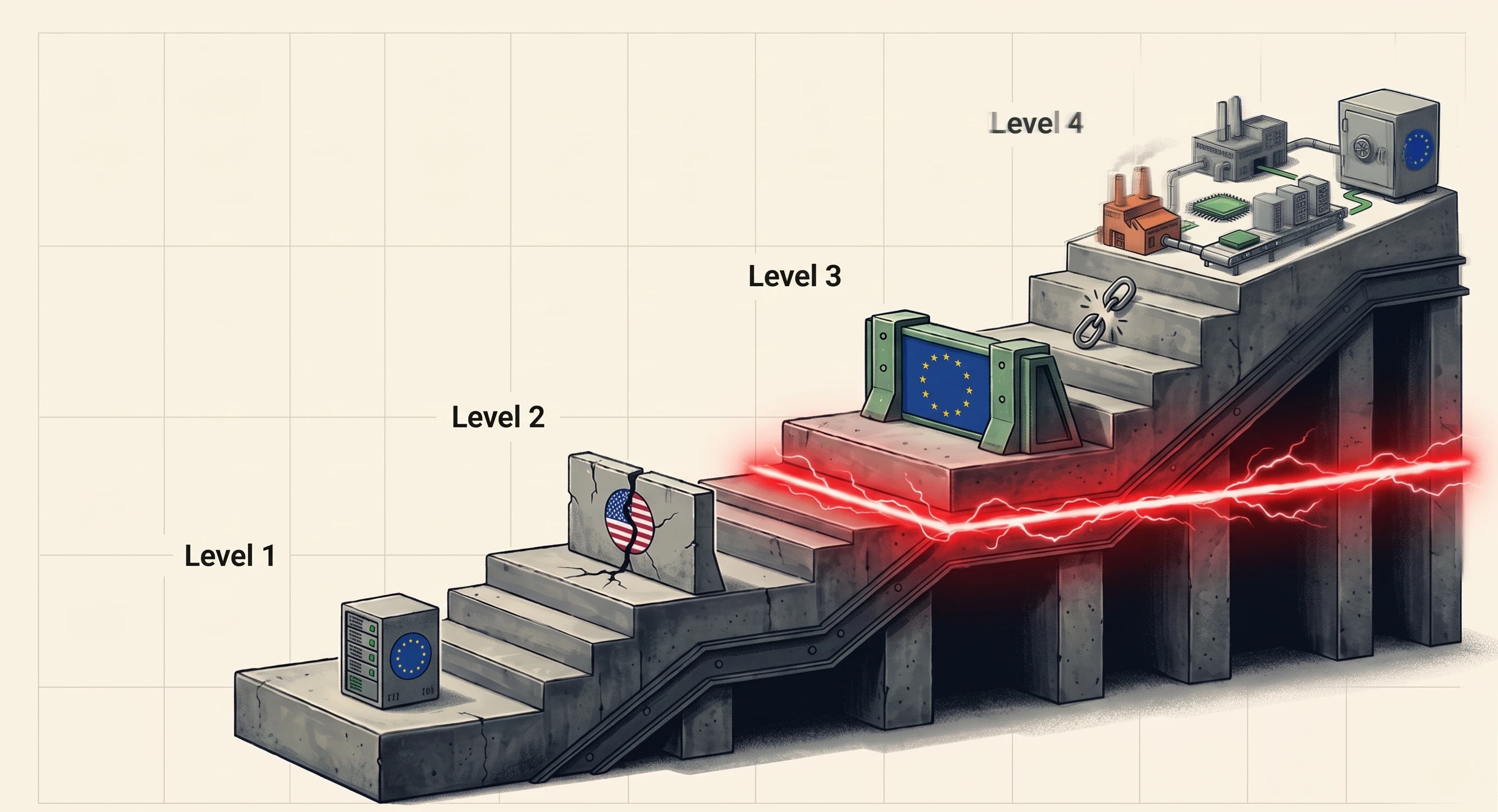
Level 1 establishes a baseline EU foundation: Providers, infrastructure, and data processing must be largely situated within the Union and fulfill fundamental security and transparency requirements.
Level 2 expands requirements with stronger operational, legal, and supply-chain independence from third countries (including localized operational and support teams and contractual safeguards).
Level 3 tightens requirements specifically around ownership and control. Providers subject to third-country control face substantial structural hurdles; definitive classification depends on the final enacted text, third-country recognition decisions, and service audits.
Level 4 introduces the most stringent requirements for personnel vetting, third-country autonomy, and software supply chains, including comprehensive transparency and verified mitigation pathways for critical dependencies.
Fact Check1 SourceCADA Proposal & Union Assurance LevelsDetails
§CADA Proposal & Union Assurance Levels
Claim:Tiered sovereignty model establishing corporate governance and operational criteria for higher tiers
Context:European Commission & ENISA discussion framework for trustworthy cloud and AI infrastructure.
Level 3: Analysis of Sovereignty Criteria
Structural requirements regarding headquarters, ownership, and jurisdiction.
The proposed CADA framework ties higher sovereignty tiers directly to strict criteria covering ownership structures, personnel autonomy, and jurisdictional conflicts.
Level 3: The Filter for Genuine Independence
US hyperscalers invest billions in European "Sovereign Cloud" setups. But under proposed CADA Level 3 criteria, a US parent corporation represents a major structural hurdle.
| Provider | EU HQ | EU Owner | No US Parent Co. | EU Staff Only | CADA Level 3 Structural Status* |
|---|---|---|---|---|---|
| Hetzner / OVHcloud / Scaleway / IONOS | ✔ | ✔ | ✔ | ✔ | STRUTURALLY ALIGNED* |
| Amazon AWS / Microsoft Azure / Google Cloud | ✔ | ✘ | ✘ | ✘ | STRUCTURAL HURDLE* |
| Criterion | EU-CloudHetzner / OVH / IONOS | US-HyperscalerAWS / Azure / GCP |
|---|---|---|
| EU Headquarters | ✔ | ✔ |
| EU Ownership | ✔ | ✘ |
| No US Parent Co. | ✔ | ✘ |
| EU Staff Only | ✔ | ✘ |
| CADA Level 3* | STRUTURALLY ALIGNED* | STRUCTURAL HURDLE* |
Note: * Indicative assessment; no formal audit determination. US jurisdiction under the CLOUD Act (18 U.S.C. § 2713) represents a substantial structural hurdle under the proposed higher CADA tiers. Definitive classification depends on the final enacted regulation, potential third-country adequacy decisions, and formal service audits.
European providers (such as Hetzner, OVHcloud, Scaleway, IONOS) possess structural alignment with Level 3 requirements due to EU headquarters and domestic governance, subject to future formal conformity audits.
International hyperscalers (AWS, Microsoft Azure, Google Cloud) face substantial structural hurdles under the proposed criteria regarding corporate separation and extraterritorial obligations under the US CLOUD Act.
EuroHPC AI Factories: European Compute Infrastructure
Up to €10 Billion combined investment envelope for European AI Factories and supercomputing.
To retain frontier talent and startups within Europe, the European Union finances a network of specialized AI Factories.
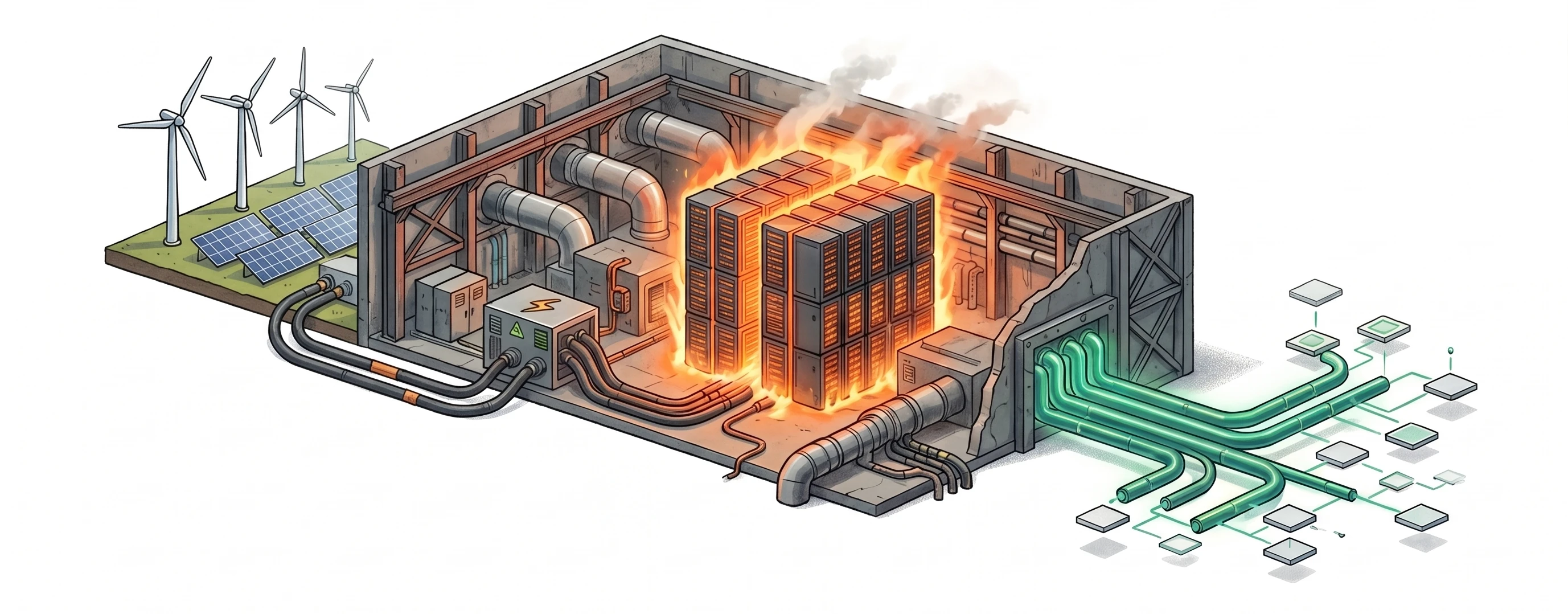
Exascale systems such as JUPITER (FZ Jülich) and Alice Recoque (Jules Verne Consortium) provide European researchers and startups with access to frontier compute clusters.
Direct integration with renewable energy sources and industrial district heating sets new standards for energy-efficient large-scale inference.
Fact Check1 SourceEuroHPC AI Factories PolicyDetails
§EuroHPC AI Factories Policy
Claim:Up to €10B combined EU and Member State investments for AI Factories and EuroHPC infrastructure
Context:Regulation (EU) 2024/1732 providing European supercomputing capacity for AI foundation model development.
Source:EuroHPC Joint Undertaking↗
The Pillars of European AI Sovereignty
Three strategic pillars operating in alignment.
Technological sovereignty is not achieved through isolated measures, but through the mutual reinforcement of algorithmic efficiency, regulatory protection, and domestic physical infrastructure.
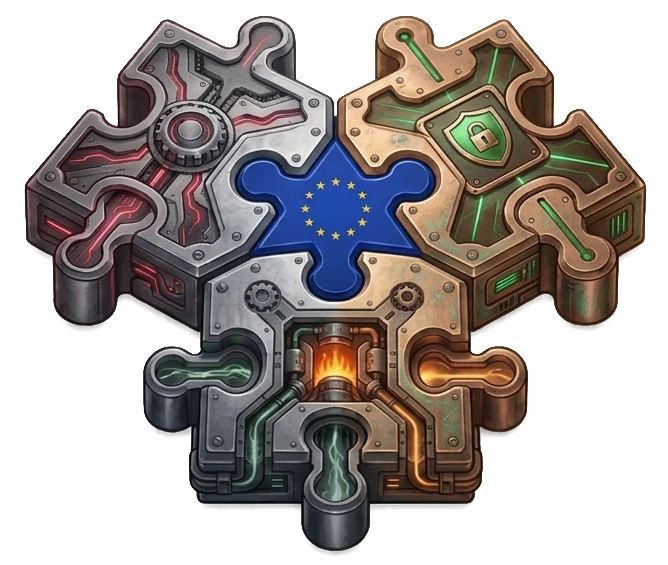
1. Efficiency-Driven Architectures: Systematic adoption of sparse MoE and compressed open-weights models to circumvent hardware bottlenecks via software design.
2. Sovereign Regulatory Framework (CADA): Establishing clear assurance tiers (Level 3) that give public institutions and commercial enterprises verifiable, independent cloud options.
3. Domestic Compute Capacity (EuroHPC): Physical construction and dependable operation of modern high-performance infrastructure on European soil.
Constructing the Digital Continent
Interconnecting major data centers and research hubs across Europe.
Geopolitical shifts have intensified both the urgency and political resolve across Europe to construct autonomous digital infrastructure.
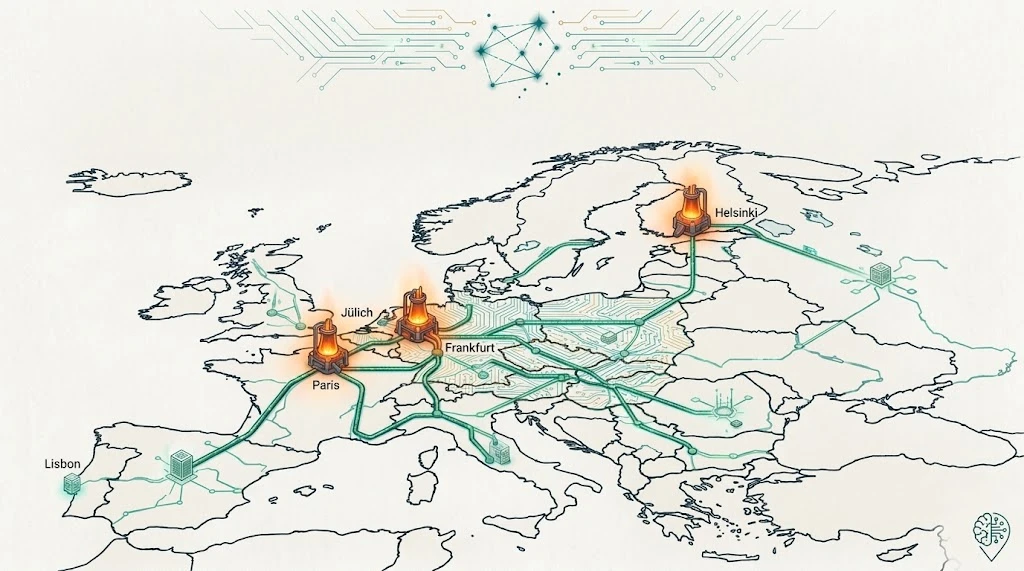
From JUPITER in Jülich to AI centers in Paris, routing hubs in Frankfurt, and green Nordic data centers in Finland, an interconnected European high-performance backbone is emerging.
The strategic initiatives and foundational investments are in motion – industry execution, research adoption, and public procurement will now determine European self-determination in the age of intelligence.
Primary Sources & Verification
Index of verified claims, scientific citations, and official regulatory directives.
| Chapter & Claim | Context | Primary Source | Link |
|---|---|---|---|
| Slide 01 § Expansion of European Compute & AI Capacity EU initiatives like InvestAI and EuroHPC aim to mobilize hundreds of billions in investments for AI and digital infrastructure | Strategic initiatives of the European Commission to strengthen European AI and data center capacity. | European Commission – InvestAI & AI Factories | Verify ↗ |
| Slide 02 § Hyperscaler Capex Alphabet $150B cumulative infrastructure expenditure | Consolidated infrastructure capex guidance in SEC Form 10-K filings. | Alphabet Inc. Investor Relations | Verify ↗ |
| Slide 06 § Research Gap & Citations Frontier model benchmark gap narrowed to ~2.7%; $285.9B (US) vs $12.4B (China) in measured private AI investment | Stanford HAI AI Index & ASPI analyze publication citations and comparative model benchmark convergence. | Stanford HAI & ASPI | Verify ↗ |
| Slide 08 § Extraterritorial Disclosure Obligations in US Law US CLOUD Act (18 U.S.C. § 2713) establishes disclosure obligations regardless of physical data location | 18 U.S.C. § 2713 obligates US service providers to disclose data within their custody or control regardless of physical server location. | Legal Information Institute – Cornell Law (18 U.S.C. § 2713) | Verify ↗ |
| Slide 09 § Pillar 1: Cloud Sovereignty & EU Data Act Proposed legal shield: CADA and Cloud Rulebook address data control in public procurement | European Commission digital strategy establishing criteria for data portability and immunity. | European Commission (Cloud Policies & Data Act) | Verify ↗ |
| Slide 09 § Pillar 2: EuroHPC AI Factories Initiative Up to €10B overall volume across EuroHPC and AI Factories for European supercomputing and compute infrastructure | Regulation (EU) 2024/1732 amending the EuroHPC Regulation with regard to the AI Factories initiative. | EuroHPC Joint Undertaking (EuroHPC JU) | Verify ↗ |
| Slide 09 § Pillar 3: Open Source AI & Foundation Models Open Source First: Alliance for Language Technologies & Open-Weights Foundation Models | European Digital Infrastructure Consortium (ALT-EDIC) for open, sovereign multilingual AI models. | European Commission – ALT-EDIC Consortium | Verify ↗ |
| Slide 10 § CADA Proposal & Union Assurance Levels Tiered sovereignty model establishing corporate governance and operational criteria for higher tiers | European Commission & ENISA discussion framework for trustworthy cloud and AI infrastructure. | ENISA & European Commission (Cloud Assurance Framework) | Verify ↗ |
| Slide 12 § EuroHPC AI Factories Policy Up to €10B combined EU and Member State investments for AI Factories and EuroHPC infrastructure | Regulation (EU) 2024/1732 providing European supercomputing capacity for AI foundation model development. | EuroHPC Joint Undertaking | Verify ↗ |
EU initiatives like InvestAI and EuroHPC aim to mobilize hundreds of billions in investments for AI and digital infrastructure
Context:
Strategic initiatives of the European Commission to strengthen European AI and data center capacity.
Alphabet $150B cumulative infrastructure expenditure
Context:
Consolidated infrastructure capex guidance in SEC Form 10-K filings.
Frontier model benchmark gap narrowed to ~2.7%; $285.9B (US) vs $12.4B (China) in measured private AI investment
Context:
Stanford HAI AI Index & ASPI analyze publication citations and comparative model benchmark convergence.
US CLOUD Act (18 U.S.C. § 2713) establishes disclosure obligations regardless of physical data location
Context:
18 U.S.C. § 2713 obligates US service providers to disclose data within their custody or control regardless of physical server location.
Proposed legal shield: CADA and Cloud Rulebook address data control in public procurement
Context:
European Commission digital strategy establishing criteria for data portability and immunity.
Up to €10B overall volume across EuroHPC and AI Factories for European supercomputing and compute infrastructure
Context:
Regulation (EU) 2024/1732 amending the EuroHPC Regulation with regard to the AI Factories initiative.
Open Source First: Alliance for Language Technologies & Open-Weights Foundation Models
Context:
European Digital Infrastructure Consortium (ALT-EDIC) for open, sovereign multilingual AI models.
Tiered sovereignty model establishing corporate governance and operational criteria for higher tiers
Context:
European Commission & ENISA discussion framework for trustworthy cloud and AI infrastructure.
Up to €10B combined EU and Member State investments for AI Factories and EuroHPC infrastructure
Context:
Regulation (EU) 2024/1732 providing European supercomputing capacity for AI foundation model development.